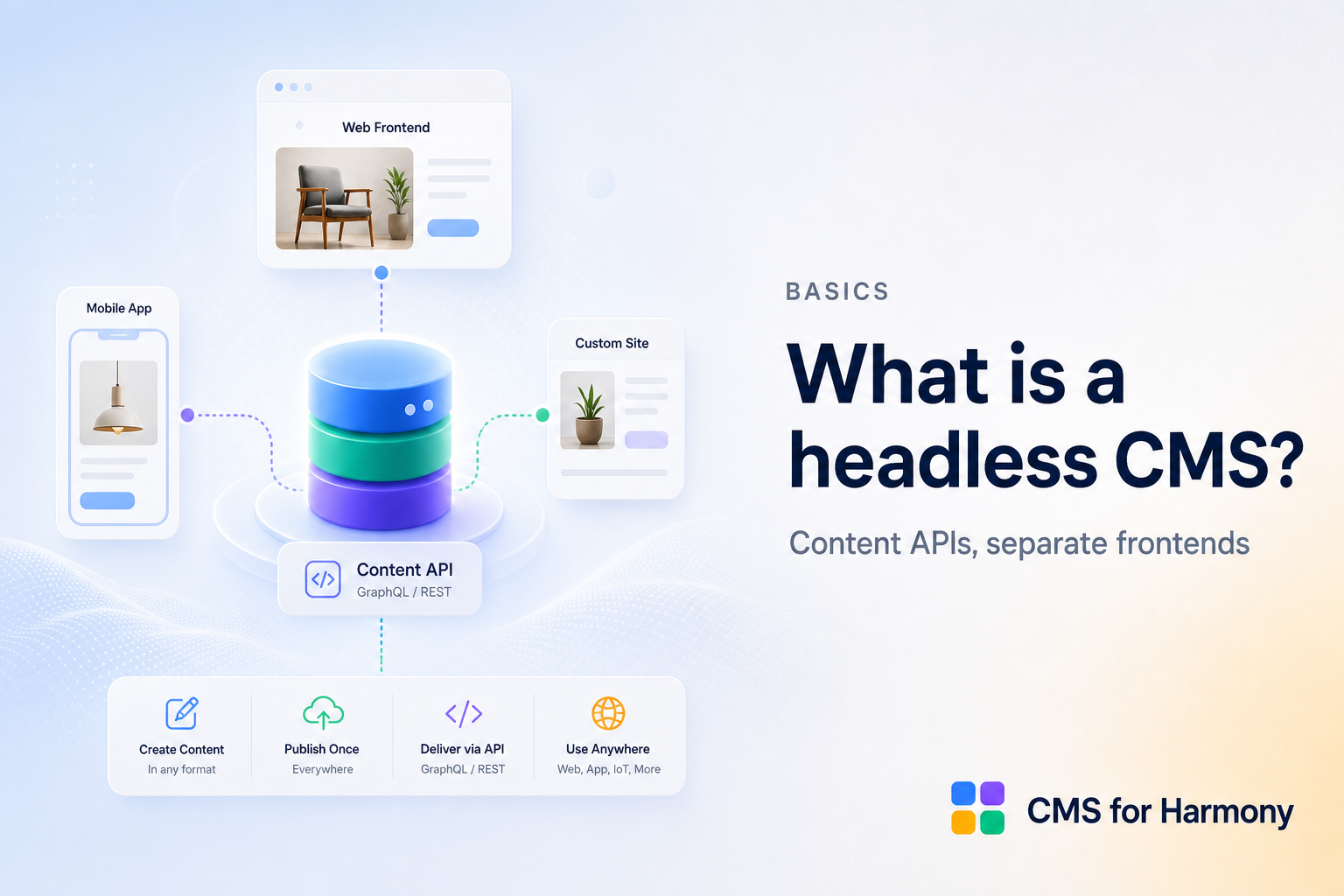
A headless CMS stores content and delivers it through APIs, without forcing a single built-in website theme as the only “head.” Your frontend — a Harmony site, a custom Astro app, a mobile client — requests content and decides how to render it.
Traditional vs headless (in plain language)
- Coupled / traditional: The CMS also owns much of the page builder and templates.
- Headless: The CMS focuses on content and APIs; presentation is separate.
In practice, many platforms (including Wix) offer both: visual site building and structured content you can query from different surfaces.
Why builders care
Headless-style content helps when you want:
- The same collection on multiple layouts or sites
- Item URLs and SEO controlled deliberately
- Forms that write back into collections
- Future clients (apps, kiosks) reading the same data
Wix CMS in this picture
Wix CMS collections are structured content with permissions, media, and dashboards. On Harmony, you still need displays that know how to read those collections. CMS for Harmony’s widgets sit on the “head” side: they fetch collection data and render tables, cards, galleries, calendars, forms, and dynamic item pages.
You are not forced into a separate third-party headless vendor to get collection-driven layouts on Harmony — but the pattern (content separate from presentation) is the same idea.